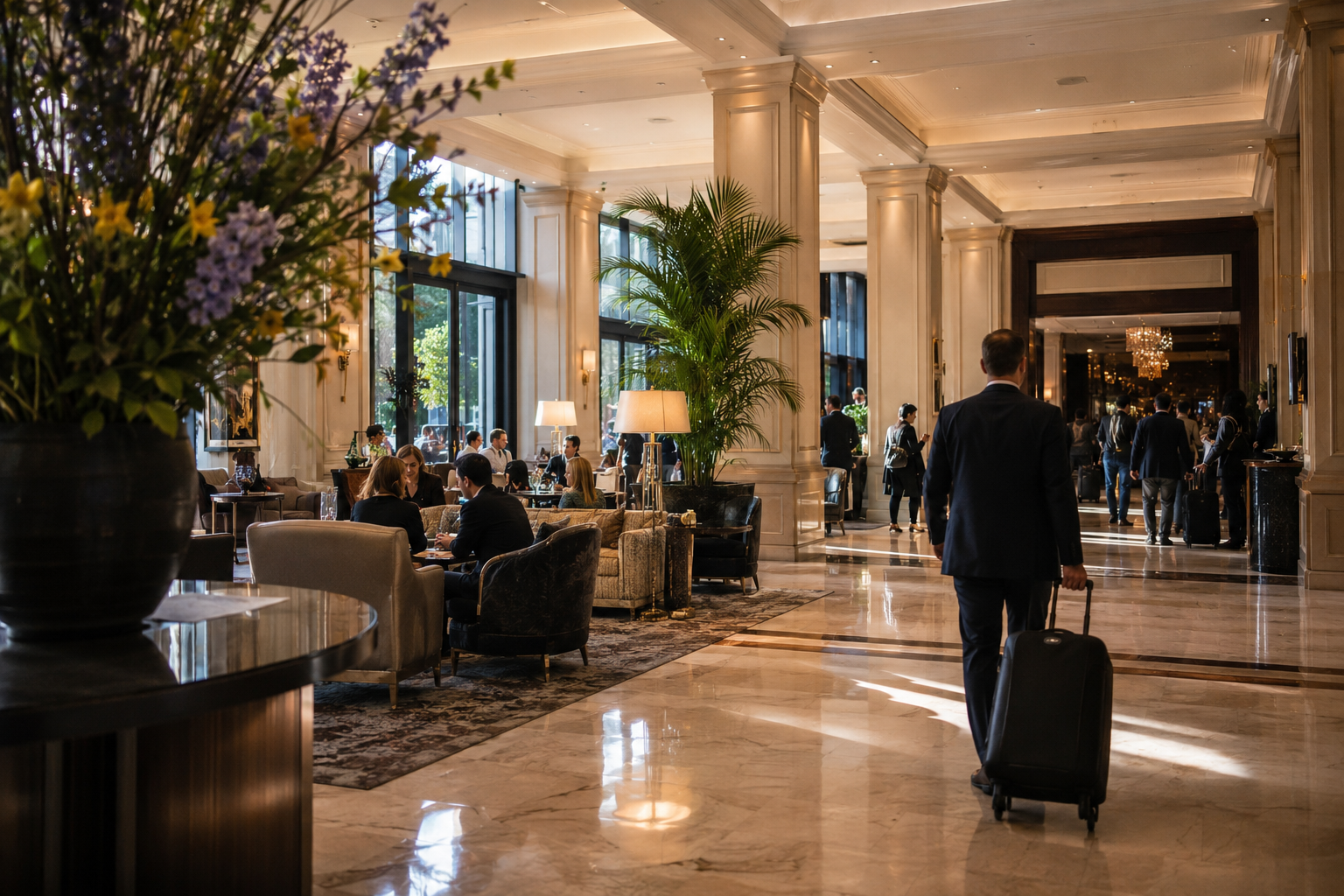

Amsterdam’s boutique hotel market continues to attract investors, entrepreneurs and hospitality professionals looking to create distinctive guest experiences. The city’s combination of historic buildings, international appeal, cultural relevance and year-round visitor demand creates strong opportunities for independent hotels with a clear identity. Unlike traditional large-scale hotels, boutique properties can compete through character, personalised service, thoughtful design and a unique connection to the city.
However, creating a successful boutique hotel in Amsterdam requires much more than a beautiful interior, a strong concept or a desirable location. Behind every memorable guest experience is a complex operational model that needs to balance revenue generation, cost control and service quality. The reality of running a boutique hotel in Amsterdam is that margins are often tighter than they appear. High real estate costs, rising labour expenses, increasing supplier prices and guest expectations for exceptional service all create pressure on profitability.
The most successful boutique hotels understand that profitability is not created by occupancy alone. A hotel can have strong room sales and still struggle financially if pricing decisions, staffing levels, purchasing processes and daily operations are not carefully managed. Sustainable performance comes from understanding the relationship between revenue, costs and operational execution.
This is where smart operational strategy becomes a competitive advantage. Profitable boutique hotels combine commercial thinking with operational discipline: they optimise their room rates based on demand patterns, manage labour efficiently without compromising guest experience, create clear operating procedures, reduce unnecessary waste and use data to make better decisions.
In Amsterdam’s competitive hospitality market, the difference between an attractive hotel and a profitable hotel is often found behind the scenes. Strong concepts attract guests, but structured operations determine whether those guests translate into long-term financial success.
This article explores the key factors that influence boutique hotel profitability in Amsterdam, including operational costs, occupancy management and the strategic decisions that allow independent hotels to grow while maintaining quality and efficiency.
A Market Full of Opportunity and Pressure
Amsterdam remains one of Europe’s most attractive hospitality destinations, supported by a strong international reputation, cultural appeal and a steady flow of leisure and business travellers. The city’s historic neighbourhoods, unique architecture and reputation for offering memorable experiences create an ideal environment for boutique hotels that can provide something beyond a standard accommodation experience.
This shift in traveller expectations has created opportunities for independent hotels. Modern guests are increasingly looking for authenticity, personalisation and a sense of place. They are willing to choose smaller, character-driven properties when the experience feels distinctive and aligned with the identity of the destination. Boutique hotels that successfully combine thoughtful design, local connection and high service standards can therefore build strong demand and differentiate themselves from larger hotel brands.
However, operating a boutique hotel in Amsterdam also comes with significant structural challenges. The same characteristics that make the city attractive also create operational pressure. Real estate costs are among the highest in the Netherlands, availability of suitable hotel locations is limited and regulatory requirements continue to influence how hospitality businesses can develop and operate. For many independent hotel owners, expansion through additional properties is not always the most realistic path to growth.
At the same time, labour remains one of the biggest challenges within the hospitality sector. Finding and retaining skilled employees, managing wage pressures and maintaining consistent service levels require careful planning. A boutique hotel typically relies more heavily on personal interaction and service quality than larger standardised properties, meaning operational inefficiencies can quickly impact both guest satisfaction and profitability.
This creates a unique challenge: when external growth opportunities are limited, the biggest opportunity lies within the operation itself. Improving productivity, optimising processes, controlling costs and making better use of available data become essential strategies for increasing profitability.
In Amsterdam’s boutique hotel market, success is therefore not determined solely by location, design or demand. Those elements may attract guests, but long-term performance depends on how effectively the business converts demand into sustainable financial results. Hotels that combine a strong concept with disciplined operational management are best positioned to navigate the pressure while capturing the opportunities the market provides.
Understanding the Core Drivers of Profitability
The profitability of a boutique hotel is rarely determined by one single factor. It is the result of how effectively three interconnected drivers are managed: occupancy, pricing and cost structure.
Many hotel operators naturally focus first on occupancy. A full hotel feels like a healthy hotel. Empty rooms are visible, while operational inefficiencies often remain hidden in the background. However, occupancy alone is a misleading measure of success. A property can achieve strong room nights and still generate disappointing returns if those rooms are sold at the wrong price or require an inefficient operating model to deliver.
Occupancy should therefore be viewed as a measure of demand capture, not profitability. In Amsterdam, boutique hotels with a strong market position can often achieve high annual occupancy levels, supported by the city’s international visitor demand and year-round appeal. But the real question is not simply: “How many rooms did we sell?” The more important question is: “Did we sell the right rooms, at the right price, with the right operating model behind them?”
This is where pricing strategy becomes critical. The average daily rate (ADR) represents more than just a room price; it reflects how effectively a hotel understands its market, its guests and its demand patterns. Boutique hotels often have the ability to command premium rates because of their unique identity and experience. However, pricing decisions need to adapt to seasonality, local events, booking behaviour and competitive dynamics. A small pricing mistake multiplied across thousands of room nights can have a significant impact on annual profitability.
The third driver is cost structure, which is often where operational discipline makes the biggest difference. Every boutique hotel carries a combination of fixed and variable costs. Rent, financing, insurance and management salaries create a fixed cost base that exists regardless of occupancy. Other costs, such as housekeeping hours, utilities, amenities and labour scheduling, fluctuate with operational activity.
The challenge is that these three drivers are not independent. Increasing occupancy can improve revenue, but it can also increase labour requirements and operational complexity. Raising prices can improve margins, but only if the guest experience and market positioning support that decision. Reducing costs can improve profitability, but poorly designed cost reductions can damage service quality and long-term demand.
This is why successful hotel operations require more than monitoring individual numbers. The strongest operators understand the system behind the numbers: how commercial decisions affect operations, how operational decisions affect costs, and how daily execution influences financial performance.
A profitable boutique hotel is not built by chasing higher occupancy, higher prices or lower costs in isolation. It is built by creating alignment between demand, pricing strategy and operational capability.
The Complexity Behind Costs
One of the most underestimated challenges in boutique hotel operations is understanding how costs actually behave. While revenue performance is usually tracked closely through metrics such as occupancy, average daily rate and RevPAR, the cost side of the business is often viewed through a much simpler lens: total expenses at the end of the month.
This creates a blind spot. Not all costs behave in the same way, and not all costs create the same operational impact. A profitable hotel needs to understand not only how much it spends, but why those costs exist, how they change with demand and whether they support the guest experience.
Staffing is one of the clearest examples. A boutique hotel cannot operate with a completely flexible workforce. A certain level of operational capacity is required every day to prepare rooms, welcome guests, handle reservations and maintain service standards. However, demand fluctuates significantly throughout the week and across seasons. Without a well-designed staffing model, hotels often find themselves in one of two situations: overcapacity during quieter periods or understaffing when demand increases.
Both situations create costs. Excess capacity reduces productivity and increases labour costs per occupied room. Insufficient capacity may reduce service quality, create employee pressure and ultimately affect guest satisfaction and reputation. The challenge is not simply having the right number of people; it is creating an operating model where staffing capacity matches the way the business actually performs.
Distribution costs create another layer of complexity. Online travel agencies provide valuable access to international demand, but that access comes with a price. Commission structures can significantly reduce the value of each booking, particularly when a large percentage of reservations depend on external channels. These costs often remain less visible because they are deducted before revenue reaches the hotel, making their impact easier to overlook.
The same principle applies to many operational expenses: housekeeping supplies, amenities, laundry, maintenance, utilities and outsourced services. Individually, these costs may appear manageable. However, small inefficiencies repeated across thousands of guest interactions can have a meaningful impact on profitability.
This is why understanding the true cost of operating a hotel requires more than reviewing a monthly profit and loss statement. Operators need visibility into the relationship between activity and cost: the cost of cleaning a room, serving a guest, processing a booking or maintaining service standards.
Without this operational view, decision-making becomes reactive. Managers respond to rising costs after they appear rather than understanding the underlying drivers behind them.
The most profitable boutique hotels are not necessarily those with the lowest costs. They are the ones that understand their cost structure well enough to make deliberate choices about where to invest, where to optimise and where inefficiencies are quietly reducing their margins.
Where Profitability Erodes
Profitability in a boutique hotel rarely disappears because of one dramatic mistake. More often, it gradually declines through a series of small operational decisions that appear reasonable in isolation but create inefficiencies when combined.
A few additional labour hours here, unnecessary discounts there, slightly higher purchasing costs, inefficient scheduling or missed revenue opportunities during high-demand periods may not seem significant on their own. However, when these decisions are repeated every day across hundreds or thousands of guest interactions, they can create a substantial impact on annual performance.
One of the most common causes of margin erosion is a disconnect between demand and operational capacity. Hospitality businesses operate in a constantly changing environment. Occupancy fluctuates by season, day of the week, events and market conditions, yet many operating models remain relatively static.
During quieter periods, hotels may carry more operational capacity than required. Teams are scheduled based on habit rather than actual demand patterns, creating unnecessary labour costs. During peak periods, the opposite challenge appears: demand increases faster than the operation can adapt. Teams become stretched, service levels decline and managers are forced into reactive decisions. Neither situation is simply a staffing problem. It is a planning problem.
The same principle applies to revenue management. Without forward-looking demand forecasting, pricing decisions often become reactive. Hotels may rely too heavily on historical performance, adjusting rates based on what happened last year rather than what is likely to happen next month. This can lead to missed opportunities during periods of strong demand or excessive discounting when demand is naturally lower.
The underlying issue is that many operational decisions are managed independently. Revenue teams focus on selling rooms, operational teams focus on delivering service and finance teams focus on controlling expenses. Each function may be performing well within its own responsibilities, while the overall system remains inefficient.
A profitable hotel requires these decisions to be connected. Pricing decisions influence occupancy, occupancy influences staffing requirements, staffing influences service quality and service quality influences future demand. Every operational choice creates a consequence somewhere else in the business.
The strongest hotel operators understand that profitability is not achieved through isolated improvements. It comes from creating alignment between commercial strategy and daily execution. When revenue, operations and cost management work as one integrated system, the hotel becomes more predictable, more efficient and better positioned for long-term performance.
Moving Toward a More Structured Model
The most successful boutique hotels are increasingly moving away from managing by instinct alone. Experience and intuition will always play an important role in hospitality, but they become significantly more powerful when supported by a clear operating model and reliable information.
A structured approach does not mean removing the human element from hospitality. It means creating better visibility into what drives performance and enabling teams to make decisions with greater confidence. Instead of reacting to problems after they occur, operators begin identifying patterns, anticipating challenges and adjusting the business before performance is affected.
This starts with creating stronger connections between operational drivers and financial outcomes. Occupancy forecasts should not exist only within the revenue management process; they should directly influence staffing plans, purchasing decisions and operational preparation. Expected demand should determine how many employees are scheduled, how inventory is managed and where resources need to be allocated.
The same principle applies to pricing. A room rate should not be viewed as an isolated commercial decision. Pricing influences guest expectations, occupancy levels, operational workload and ultimately profitability. Hotels that understand these relationships can make more deliberate choices instead of simply reacting to competitor prices or short-term fluctuations.
Another important shift is moving beyond revenue-focused thinking toward contribution margin thinking. Revenue tells you what comes into the business, but it does not show what remains after the costs required to generate that revenue. A booking through a high-commission channel, for example, may look attractive from a revenue perspective but deliver a very different financial outcome once distribution costs, housekeeping and operational requirements are considered.
Understanding contribution margins allows operators to evaluate the true value of different decisions. Which channels create the most profitable demand? Which room types generate the strongest returns? Which periods require additional focus to improve performance? These questions lead to better strategic choices.
Forward-looking planning also becomes essential in a market as dynamic as Amsterdam. Demand can change quickly due to events, economic conditions, travel trends or competitive developments. Hotels that prepare different scenarios — from lower-than-expected occupancy to periods of exceptional demand — are better equipped to respond without making rushed decisions.
The goal is not to predict the future perfectly. No operator can remove uncertainty from hospitality. The goal is to build an operation that can adapt intelligently when circumstances change.
A structured hotel operation creates something every hospitality leader needs: clarity. It connects daily decisions with financial outcomes and transforms operational management from a reactive process into a strategic advantage.
From Concept to Control
Every successful boutique hotel begins with a vision. A distinctive concept, thoughtful design and a clear guest experience are often what attract the first guests and create market attention. These elements are essential because they define what makes the property different in a competitive hospitality landscape.
However, a concept alone does not create a sustainable business. The moment a boutique hotel moves beyond the opening phase, complexity begins to increase. More guests mean more operational decisions: staffing levels need to be adjusted, service standards need to be maintained, costs need to be controlled and guest expectations need to be consistently met.
This is where many hotels face a critical transition. The qualities that make a property unique (personal service, attention to detail and flexibility) can become difficult to maintain as the operation grows. Without clear processes, ownership and performance visibility, the business can become increasingly dependent on individual effort rather than a reliable operating model.
Structure is what allows a strong concept to scale. It creates the foundation that enables teams to deliver the intended experience consistently while maintaining financial control. Standardisation does not mean making hospitality impersonal; it means removing unnecessary complexity so teams can focus their energy on what truly matters: the guest experience.
The highest-performing boutique hotels understand this balance. They protect the uniqueness of their concept while building the operational discipline required to support it. They translate their vision into clear ways of working, measurable performance indicators and informed decision-making.
The difference between a memorable hotel and a profitable hotel is often not the idea behind it. Many properties have compelling concepts. The difference lies in execution: how effectively that concept is converted into a repeatable operation that performs day after day.
A strong concept creates the promise. A strong operating model delivers it.
A More Sustainable Path Forward
The Amsterdam boutique hotel market will continue to offer significant opportunities for operators who understand how to balance guest experience with operational performance. The demand is there, the city remains attractive and travellers continue to value distinctive hospitality concepts.
However, sustainable success is not created by demand alone. A strong location, beautiful design and a compelling guest experience may attract attention, but long-term profitability depends on the systems behind the experience. Hotels that consistently perform well are those that understand their operational drivers, make informed decisions and create alignment between commercial ambition and daily execution.
For operators and investors, this requires a shift in mindset. Instead of managing performance through reactive decisions, successful businesses build a more structured approach. They create transparency into their cost drivers, connect demand forecasts with operational capacity and use financial insight to guide everyday decisions.
The goal is not simply to reduce costs or increase revenue. It is to build an operation where resources are used effectively, teams can perform consistently and management has the visibility needed to make better decisions.
Turning Operational Complexity Into Clarity
Many boutique hotel operators recognise that improvements are possible, but the challenge is often knowing where to begin. The first step is rarely implementing more tools or adding more processes. It starts with understanding how the business actually operates today.
Where is profitability being created? Where is it being lost? Which operational decisions have the biggest financial impact? Are staffing, pricing and demand planning working together or operating as separate functions? At The Operations Studio, we help hospitality businesses answer these questions by bringing structure, clarity and operational discipline into complex environments. Through a combination of operational analysis, performance insights and practical improvement strategies, we help hotels create stronger links between how they operate and how they perform financially.
The result is not a one-time improvement project, but a stronger foundation for continuous performance. When hospitality businesses understand their operations at a deeper level, they can make decisions with greater confidence and create a model that supports both guest satisfaction and sustainable profitability.
For boutique hotel owners and operators looking to strengthen performance, the first step is often a clearer understanding of the opportunities already within the business.

Leave a Reply