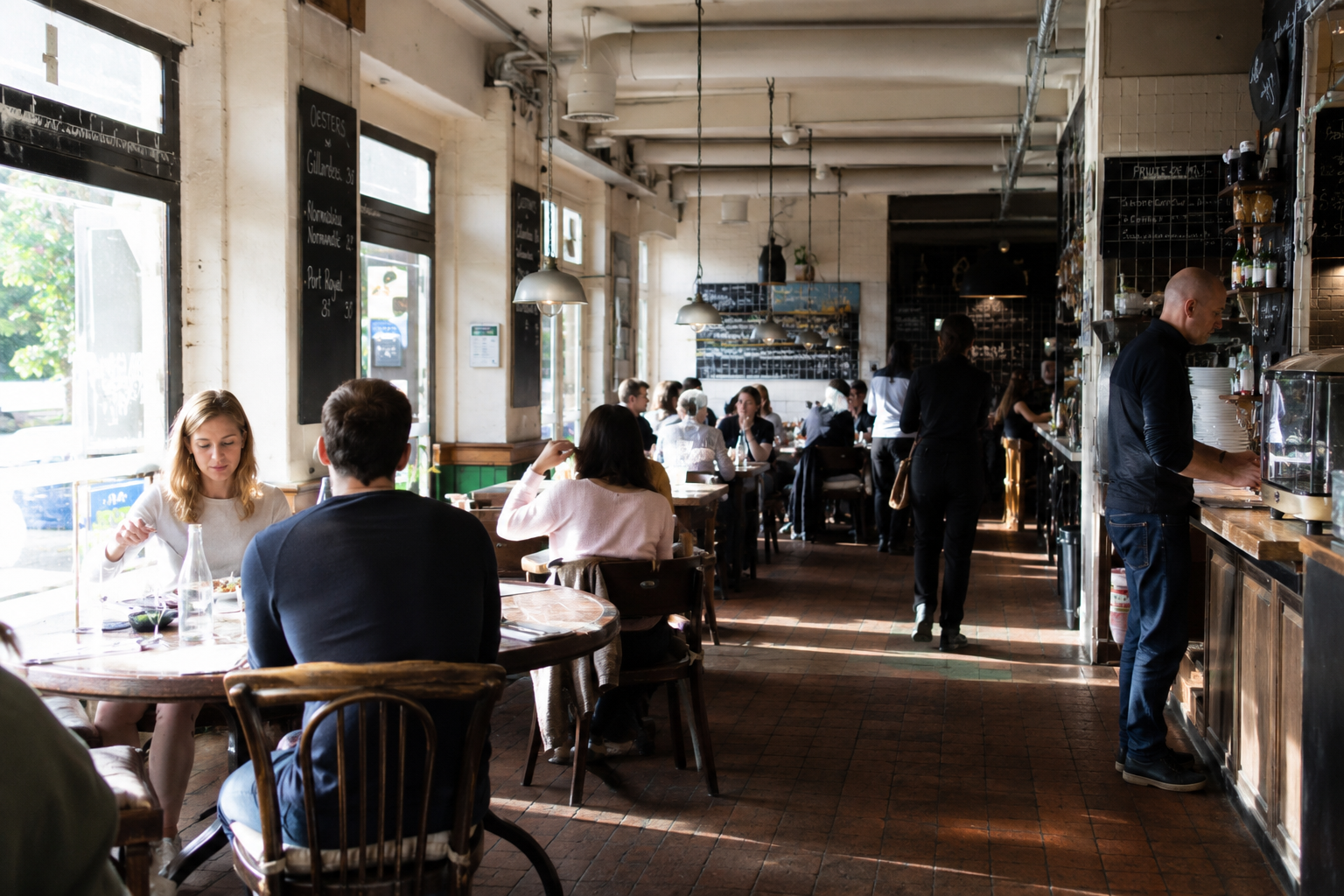

Opening a restaurant is often driven by passion. A unique concept, a carefully designed menu and the ambition to create memorable guest experiences are usually the starting points behind every new hospitality business. For many entrepreneurs, opening a restaurant represents the opportunity to turn creativity and expertise into something tangible; a place where people gather, connect and return.
Yet the reality of running a restaurant is far more complex than creating a great concept. The first two years are often the most challenging period because the business moves from an idea into a fully functioning operational system. What worked during the opening phase — personal involvement, informal communication and solving problems as they appear — becomes increasingly difficult to sustain as the team grows, guest expectations increase and daily complexity builds.
Restaurant failures are often explained through simple reasons: poor location, insufficient marketing, high costs or changing customer behaviour. While these factors can influence performance, they rarely tell the complete story. Many restaurants fail not because the concept lacked potential, but because the operational foundation was not strong enough to support that potential.
Behind every successful restaurant is a complex network of interconnected decisions. Menu design influences purchasing and kitchen processes. Sales forecasts influence staffing requirements. Service standards influence training needs. Pricing decisions influence profitability. When these elements are not aligned, small inefficiencies begin to accumulate until they become significant financial and operational challenges.
This is why restaurant failure rarely happens overnight. It usually develops gradually through a series of small operational gaps: unclear responsibilities, inconsistent processes, poor cost visibility, reactive decision-making and an inability to adapt as the business changes.
The restaurants that survive and grow are not necessarily those with the most innovative concepts. They are the ones that build an operating model capable of delivering their promise consistently. They understand that creativity attracts guests, but operational discipline determines whether the business can continue to serve them profitably.
This article explores the underlying operational reasons why restaurants struggle in their first two years and how a stronger focus on systems, financial visibility and execution can create a foundation for long-term success.
A Great Concept Is Not the Same as a Great Business Model
Most restaurants do not open because someone wants to create an average business. They start with a vision. It may be a unique dining concept, a distinctive cuisine, a carefully designed interior or the ambition to create a place that becomes part of the local community. In the early stages, much of the attention naturally goes toward the guest experience: the menu, the atmosphere, the branding and the story behind the restaurant.
These elements matter. A strong concept creates differentiation and gives guests a reason to choose one restaurant over another. However, a concept that attracts guests is not automatically a concept that creates a sustainable business. The difficult transition happens when the idea moves from paper into daily operations.
A restaurant is not only an experience. It is also a complex operating system where hundreds of decisions need to work together every day. The menu influences purchasing, preparation time and kitchen capacity. The service style influences staffing requirements and training needs. The price point influences the margin available to cover labour, rent and other operating expenses. Every creative choice creates operational consequences.
This is where many restaurants encounter their first major challenge. The concept was designed around what guests would love, but not always around what the business can consistently deliver. A restaurant may offer an impressive menu with extensive preparation requirements, personalised service and high-quality ingredients, but if the pricing, staffing model and kitchen processes do not support that experience, profitability quickly becomes difficult.
Consider a restaurant positioned as a premium dining experience. The owners invest heavily in design, ingredients and service standards. Guests appreciate the experience and reviews are positive. However, the restaurant requires more staff hours, more preparation time and more operational complexity than the revenue model can support. The problem is not the concept itself. The problem is the gap between the promise made to guests and the operational model required to deliver it.
Successful restaurants understand this relationship from the beginning. They design the operating model alongside the concept, not after it. They ask practical questions early: How many covers can the kitchen realistically handle? What level of staffing is required to deliver the service promise? Does the menu create enough margin? Can the guest experience be delivered consistently when the owners are not personally involved?
The strongest restaurant operators do not see operational discipline as something that limits creativity. They understand that structure protects creativity. When the foundations are clear, teams have more freedom to focus on hospitality rather than constantly solving avoidable problems.
A great concept creates attention. A strong business model creates longevity.
The Hidden Financial Pressure Behind Restaurant Failure
Many restaurant failures are not caused by a lack of revenue. In fact, some restaurants struggle despite having a strong customer base and busy service periods. The underlying issue is often that the financial model behind the operation was never fully understood. Sales figures can create a false sense of security, while the costs required to generate those sales quietly reduce profitability.
The restaurant industry operates with naturally demanding economics. Margins are influenced by multiple factors that move constantly: ingredient prices, labour availability, energy costs, rent, supplier conditions and changing customer behaviour. A small increase in one area may appear manageable, but when combined with other pressures, it can significantly affect the overall performance of the business.
One of the most common mistakes is focusing on revenue without understanding what remains after the costs required to create that revenue. A busy Friday evening with full tables may look like a success, but the real question is whether those covers generated sufficient contribution after food costs, labour hours, payment fees, waste and other operating expenses were taken into account.
This is where many restaurant owners underestimate the importance of financial visibility. Looking only at monthly turnover or overall profit at the end of the year provides limited insight. It does not explain which menu items create value, which services are most profitable, where operational waste is occurring or how different decisions influence the bottom line.
Food cost is a clear example. A restaurant may carefully calculate the ingredient cost of each dish, but profitability depends on much more than the recipe itself. Portion control, purchasing discipline, inventory management, supplier relationships and waste levels all influence the true cost of serving that dish. Without understanding these operational drivers, food cost problems often remain hidden until margins have already been affected.
Labour creates a similar challenge. Unlike some industries, restaurants cannot simply increase output without increasing operational complexity. More guests often require more preparation, more service capacity and more coordination between teams. The goal is not simply to reduce labour costs, but to understand whether labour is being converted effectively into guest experience and revenue.
The most successful restaurant operators therefore move beyond looking at costs as isolated numbers. They understand the relationship between activity and financial performance. They know how many guests they need, at what average spend, with what level of labour and resource usage, to create a sustainable result.
A restaurant does not become profitable by cutting every possible cost. It becomes profitable when every cost has a clear purpose and every operational decision supports the financial model behind the concept.
The difference between a restaurant that survives and one that struggles is often not how much money comes in. It is how clearly the business understands what it takes to create that revenue.
The Labour Challenge: When People Become the Biggest Operational Variable
Labour is one of the most complex factors in restaurant operations because it sits at the intersection of cost control and guest experience. Unlike many other expenses, labour is not simply a cost that needs to be minimised. The people working in a restaurant are responsible for creating the experience that guests remember, from the quality of service to the consistency of the food coming from the kitchen.
This creates a difficult balance. A restaurant that operates with too few people may protect margins in the short term, but the consequences often appear quickly. Service slows down, mistakes increase, employees become overwhelmed and the guest experience begins to suffer. On the other hand, a restaurant that schedules too many employees without considering demand patterns may create unnecessary labour costs that gradually reduce profitability.
Many restaurants struggle because staffing decisions are based on routines rather than operational data. Teams are often scheduled according to habit: the same number of employees every Tuesday, the same structure every weekend, or the same assumptions that have existed since opening. However, restaurant demand is rarely static. A quiet weekday lunch and a fully booked Saturday evening require completely different operating models.
A strong staffing model starts by understanding the relationship between demand and capacity. How many guests are expected? What level of preparation is required? How complex is the menu? How much service interaction does the concept promise? These questions determine the type of team structure needed to deliver the experience efficiently.
The challenge becomes even greater as restaurants grow. During the opening phase, owners and managers often compensate for inefficiencies through personal involvement. They fill gaps, solve problems and make decisions quickly because they are close to every part of the business. As the team expands, this approach becomes increasingly difficult. Without clear roles, communication structures and planning processes, operational pressure starts increasing.
Another overlooked challenge is the impact of inconsistent staffing on employee performance. Constantly changing schedules, unclear expectations and reactive decision-making can create frustration within teams. This often leads to higher turnover, which creates additional recruitment and training costs and further reduces operational stability.
The strongest restaurant operators do not view labour only as an expense line. They view it as an operational system that needs to be designed. They understand where human involvement creates value, where processes can create efficiency and how staffing decisions influence both financial performance and guest experience.
The goal is not to run a restaurant with the fewest people possible. The goal is to build a team structure that allows the restaurant to deliver its promise consistently, while ensuring that every hour of labour contributes to the success of the business. A restaurant’s people create the experience, but the operating model determines whether that experience can be delivered sustainably.
The absence of clear systems creates operational chaos
Many restaurants are built around the knowledge, energy and involvement of the founders. In the early stages, this can be a strength. Owners are close to every detail of the business, decisions are made quickly and problems are solved through direct communication. However, as the restaurant grows, relying on personal involvement as the primary operating system becomes one of the biggest barriers to long-term success.
Without clear systems, the quality of the operation becomes dependent on individual people rather than consistent ways of working. One chef may prepare a dish slightly differently from another. One shift leader may handle a guest complaint effectively, while another responds differently. A new employee may learn procedures through informal explanations that change depending on who is training them. These differences may seem small, but over time they create inconsistency.
This is particularly challenging in hospitality because restaurants are complex environments with hundreds of decisions happening every day. Opening procedures, food preparation, inventory management, ordering, cleaning routines, service standards and communication between departments all need to work together. When these processes exist only in people’s heads, the business becomes fragile. A single experienced employee leaving can take valuable operational knowledge with them.
Many restaurant owners resist creating more structure because they associate systems with bureaucracy. They fear that procedures will make the business feel less personal or remove the creativity that made the concept successful. In reality, the opposite is often true. Well-designed systems do not limit hospitality; they create the stability needed for teams to deliver better experiences consistently.
Consider a restaurant that prides itself on exceptional service. Without clear service standards, employees are left to interpret what “great service” means individually. One employee may proactively support guests, while another may focus only on completing basic tasks. The restaurant has a service promise, but no operational foundation to consistently deliver it.
Strong operating systems provide clarity. They define expectations, reduce unnecessary decisions and allow teams to focus on higher-value activities. A clear opening checklist ensures that important tasks are completed before guests arrive. A structured ordering process reduces mistakes and waste. Defined roles during service prevent confusion when pressure increases.
Systems also become increasingly important as restaurants scale. The informal communication that works in a small team becomes ineffective when more employees, shifts and responsibilities are added. Growth introduces complexity, and complexity requires a stronger operating structure.
The goal of systems is not to make a restaurant mechanical. It is to protect the elements that make the restaurant special. When the basic operational foundations are reliable, teams have more freedom to focus on creativity, connection and genuine hospitality.
The restaurants that survive beyond the first two years are rarely those where everything depends on a few talented individuals. They are the ones that successfully transform knowledge into systems and individual effort into a repeatable operating model.
Poor data visibility leads to reactive decision-making
Many restaurant owners make decisions every day based on experience, intuition and a strong understanding of their guests. This practical knowledge is valuable and often comes from years of working in hospitality. However, as a restaurant becomes more complex, intuition alone is no longer enough to understand what is truly driving performance.
A common challenge is that restaurants often have access to large amounts of data, but limited visibility into what that data actually means. Sales reports, purchasing invoices, labour hours and inventory numbers may all exist, yet they are frequently reviewed separately. Without connecting these different pieces of information, it becomes difficult to understand the relationship between operational decisions and financial outcomes.
This creates a reactive way of managing the business. A restaurant notices that profitability is declining and immediately looks for solutions: reducing staff hours, changing suppliers, increasing prices or launching promotions. While these actions may address symptoms, they do not always solve the underlying issue. Without understanding the operational drivers behind performance, decisions become based on assumptions rather than evidence.
Food cost is a good example. A restaurant may notice that food margins are under pressure and assume supplier prices are the main problem. However, the real cause could be a combination of factors: inconsistent portion sizes, inaccurate purchasing forecasts, excessive waste, poor inventory control or menu items that require too much preparation time compared to their selling price. The financial result is visible, but the operational cause remains unclear.
The same applies to labour performance. A high labour percentage does not automatically mean that a restaurant has too many employees. It may indicate inefficient scheduling, low sales during certain periods, excessive preparation time or an operating model that does not match demand patterns. The number itself is only the starting point. The real value comes from understanding what is behind it.
Restaurants that operate with stronger data visibility are able to move from reacting to problems toward anticipating them. They can identify trends earlier, understand where margins are created and make decisions based on a complete view of the business. This does not mean every decision needs to become complicated or overly analytical. It means using information to support better judgement.
The most effective operators combine hospitality experience with operational insight. They understand that numbers do not replace the human side of restaurants; they provide the clarity needed to protect it. When owners and managers understand what is happening behind the results, they can spend less time firefighting and more time improving the business. A restaurant cannot improve what it cannot clearly see. Better visibility is the foundation for better decisions.
Growth exposes weaknesses that were invisible at the start
The opening phase of a restaurant can create a misleading picture of operational health. During the first months, energy is high, the team is closely connected and owners are usually involved in almost every decision. Problems are often solved quickly because the people responsible for the business are physically present and personally invested.
However, growth changes the nature of the operation. More guests create more complexity. More employees create more communication needs. A larger volume of purchasing, preparation and service creates more opportunities for mistakes. The informal ways of working that helped the restaurant open successfully often become the same things that limit its ability to grow.
This transition is one of the most difficult moments for restaurant owners. The skills required to open a restaurant are not always the same skills required to run one successfully over time. Opening requires creativity, speed and the ability to overcome uncertainty. Operating requires structure, consistency and the ability to manage complexity.
A common example is decision-making. In a small restaurant, employees can quickly ask the owner or manager for guidance. A problem with a guest, supplier or operational issue can be solved immediately. As the team expands, this approach becomes less effective. If every decision still depends on one or two people, bottlenecks appear and the organisation becomes slower and more dependent on specific individuals.
The same pattern appears in daily operations. A restaurant may initially succeed despite inconsistent ordering routines, unclear responsibilities or informal training because the founders compensate for these weaknesses. As volume increases, these gaps become more visible. Inventory mistakes create more waste. Communication issues affect service. Training becomes inconsistent. Small inefficiencies that were manageable at a smaller scale begin to impact profitability. This is why growth does not necessarily create operational problems. It reveals the problems that were already present.
Successful restaurants understand that scaling requires a different way of working. They move from relying on individual effort toward building systems, responsibilities and processes that allow the business to perform consistently without constant intervention from the owner. This creates the foundation for sustainable growth while protecting the original guest experience. The goal is not to remove the entrepreneurial spirit that created the restaurant. It is to build an operation strong enough to support that ambition. A restaurant proves its concept when guests return. It proves its business model when the operation can continue to deliver that experience without depending entirely on the people who started it.
The most common mistake: Optimising individual problems instead of the whole system
When a restaurant starts experiencing operational pressure, the natural response is often to look for individual problems and fix them one by one. Food costs are increasing, so purchasing is reviewed. Labour costs are rising, so staffing hours are reduced. Sales are slowing, so promotions are introduced. These actions may appear logical, but they often address only one part of a much larger system.
A restaurant is not a collection of separate departments operating independently. It is an interconnected operation where every decision influences something else. A change in the menu affects purchasing, preparation time, kitchen capacity and labour requirements. A change in opening hours affects staffing, sales potential and customer behaviour. A change in pricing affects demand, guest expectations and perceived value.
This is why isolated improvements can sometimes create unintended consequences. Reducing staff hours may improve labour percentages temporarily, but if service quality declines and guests have a weaker experience, future demand may be affected. Simplifying the menu may reduce kitchen complexity, but if it removes popular items without understanding guest behaviour, it can negatively impact sales. Increasing prices may improve margins, but only if the perceived value remains aligned with customer expectations.
The challenge is that operational problems often appear in one area while their root cause exists somewhere else. A kitchen struggling during service may not have a staffing problem; it may have a menu design problem. High waste may not only be a purchasing issue; it may be caused by inaccurate forecasting or unclear inventory processes. Low profitability may not simply be a sales problem; it may be the result of an operating model that requires too many resources to deliver the current concept.
This requires restaurant leaders to look beyond symptoms and understand the relationships between different parts of the business. Instead of asking, “How do we reduce this cost?” they need to ask, “Why does this cost exist, and what operational choices are creating it?”
A systems approach means understanding how the different elements of the restaurant work together:
- The concept determines the guest promise.
- The menu determines operational complexity.
- The operating model determines how that promise is delivered.
- The team structure determines execution quality.
- The financial model determines whether the business can sustain itself.
When these elements are aligned, improvements in one area often strengthen the entire operation. When they are disconnected, solving one problem can easily create another.
The strongest restaurant operators do not focus only on fixing issues as they appear. They continuously improve the system behind those issues. They understand that sustainable profitability does not come from optimising individual parts of the restaurant, but from creating alignment across the entire operation. A restaurant is not a series of separate challenges to solve. It is one interconnected system that needs to perform as a whole.
Building a restaurant that survives beyond year two
Surviving the first two years requires more than attracting guests and generating sales. It requires building an operation that can consistently deliver the restaurant’s promise while adapting to changing circumstances. Many restaurants can create an exciting opening moment, but long-term success depends on what happens after the initial attention fades.
The restaurants that continue to perform well are usually those that move from entrepreneurial problem-solving toward operational discipline. This does not mean becoming rigid or losing the personality that made the concept attractive. It means creating enough structure that the business is not dependent on constant improvisation and individual effort. A resilient restaurant is built on several connected foundations. It understands its financial drivers and knows which activities create value. It has clear processes that allow employees to perform consistently. It has defined responsibilities so decisions can be made quickly without everything flowing through the owner. It uses operational information to identify opportunities before problems become urgent.
One of the biggest shifts is moving from managing events to managing systems. In a reactive restaurant, managers spend their time solving the latest issue: a staffing gap, an inventory problem, a guest complaint or a supplier challenge. While these situations will always occur in hospitality, strong operators spend more time improving the conditions that create those problems in the first place.
This requires a different perspective on operational excellence. It is not about removing all uncertainty from the business. Restaurants will always deal with changing demand, unexpected staff issues and external pressures. The goal is to create an operation that can absorb these challenges without losing control.
Consistency is one of the strongest indicators of a mature restaurant operation. Guests should receive a reliable experience regardless of which employee is working, which manager is on duty or how busy the restaurant becomes. Achieving this level of consistency requires more than talented individuals. It requires clear standards, effective communication and systems that support execution.
The most successful restaurants understand that operational discipline is not the opposite of creativity. It is what allows creativity to survive. When the basic elements of the business are stable, owners and teams can focus their energy on improving the guest experience, developing new ideas and creating memorable hospitality.
The first two years determine whether a restaurant remains an exciting concept or becomes a sustainable business. The difference is not only the quality of the idea. It is the strength of the operation built behind it. A restaurant succeeds when its systems are strong enough to support its ambition.
A final thought: Turning a restaurant concept into a sustainable business
The restaurant industry will always involve uncertainty. Customer preferences change, costs fluctuate, labour markets remain challenging and competition continues to increase. No operating model can remove these realities completely. However, successful restaurants are not defined by avoiding complexity. They are defined by their ability to manage complexity effectively.
Many restaurant owners recognise that improvements are possible, but the challenge is often identifying where to begin. The visible problems are usually not the real problems. A declining margin may appear to be a pricing issue, but the underlying cause may be inefficient processes. A staffing challenge may appear to be a recruitment issue, but the deeper problem may be an unclear operating model. Without understanding the connections between different parts of the business, improvement efforts often remain temporary. The starting point is gaining a clearer understanding of how the restaurant actually operates. Where is value being created? Where are resources being lost? Which processes depend too heavily on individuals? Are teams aligned around the same standards and expectations? These questions create the foundation for meaningful improvement.
At The Operations Studio, we help hospitality businesses bring structure and clarity to their operations. By analysing how restaurants work across people, processes, systems and financial performance, we support owners and management teams in identifying opportunities to improve efficiency, consistency and profitability.
Our approach focuses on building stronger operating foundations rather than applying quick fixes. Sustainable improvement comes from understanding the business as a connected system and creating the structures that allow teams to perform at their best. A successful restaurant is not built only through passion, creativity or hard work. Those elements create the foundation, but operational clarity determines whether the business can continue to deliver on its promise. The restaurants that thrive beyond their first two years are the ones that transform their vision into a system capable of supporting it.

Leave a Reply