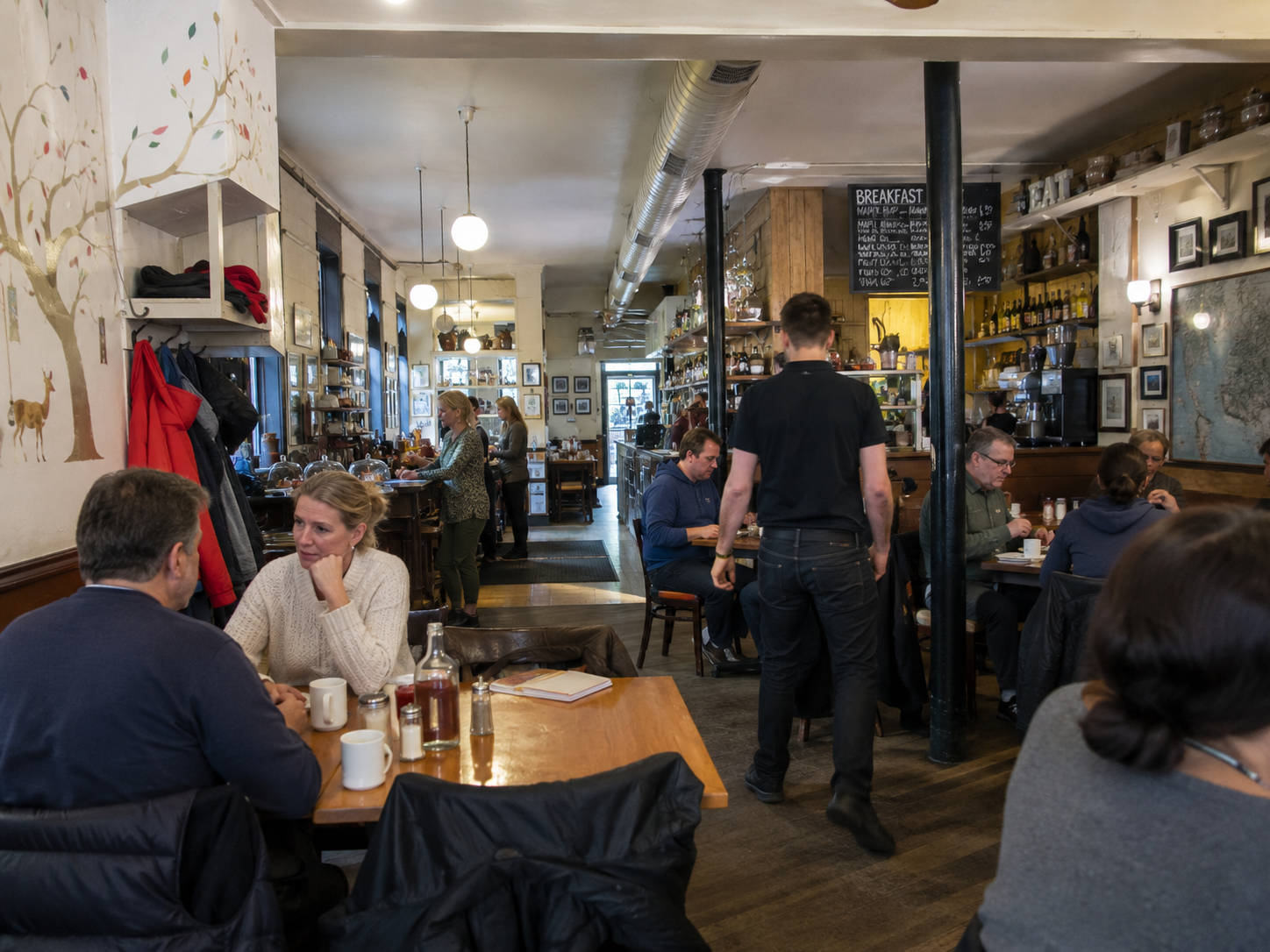

Labour is one of the most important and complex elements of any hospitality operation. In restaurants, hotels, cafés and bars, people are not simply a cost line on a financial statement. They are the people who create the guest experience, solve problems in real time and bring the concept of the business to life. A welcoming interaction at the front desk, attentive service during a busy dinner shift or a perfectly executed breakfast service all depend on having the right people in the right place at the right time.
At the same time, labour remains one of the largest operational expenses in hospitality. Rising wages, staffing shortages and increasing guest expectations have created significant pressure for operators to improve efficiency. This often leads to a difficult question: how can a hospitality business reduce labour costs without reducing the quality of the guest experience?
Many operators approach this challenge from the wrong perspective. The immediate reaction is often to cut hours, reduce team size or increase workload on existing employees. While these actions may improve short-term financial results, they can create longer-term consequences. Service quality declines, employees become overwhelmed, mistakes increase and the guest experience that differentiates the business begins to weaken. In many cases, the issue is not that a business has too many employees. The issue is that the operating model does not effectively translate labour hours into value.
The most successful hospitality businesses understand that labour efficiency is not about having fewer people. It is about creating better alignment between demand, processes, team structure and service expectations. A well-designed operation allows employees to spend more time on activities that genuinely improve the guest experience while reducing unnecessary complexity behind the scenes.
This requires looking beyond labour costs as a percentage of revenue and understanding the systems that influence them. How accurately are staffing levels matched to demand? Are teams spending time on avoidable tasks? Are processes clear enough that employees can work efficiently? Are managers making staffing decisions based on real operational insight or simply repeating schedules that have always existed?
A restaurant that schedules the same team structure every weekday regardless of demand, or a hotel that uses the same operational approach during both quiet and peak periods, is not necessarily providing better service. It may simply be carrying unnecessary complexity. True efficiency comes from understanding what the business needs at different moments and designing the operation accordingly.
Reducing labour costs while protecting guest experience is therefore not a contradiction. The challenge is not to remove the human element from hospitality, but to create an environment where people can perform at their best. When operations are designed effectively, teams feel less pressure, guests receive more consistent service and the business becomes financially stronger.
This article explores how hospitality operators can improve labour efficiency through better planning, smarter processes and stronger operational design, creating a model where cost control and guest experience reinforce each other rather than compete.
Why labour costs become a symptom of operational problems
When labour costs are higher than expected, the first instinct is often to look at the number of employees or the total hours scheduled. However, labour costs are rarely created by staffing decisions alone. In many cases, high labour costs are a symptom of deeper operational challenges that influence how efficiently the team can perform.
A restaurant, hotel or café can have the right number of employees and still operate inefficiently. The reason is that labour productivity is influenced by everything surrounding the employee: the clarity of processes, the design of the workspace, the complexity of the menu or service model, the accuracy of demand forecasting and the way responsibilities are organised. When these elements are not aligned, employees spend more time solving avoidable problems rather than creating value for guests.
Consider a restaurant with a large menu and complex preparation requirements. Management may notice that labour costs are increasing and conclude that the kitchen team is too large. However, the underlying issue may be that the menu creates unnecessary operational complexity. More ingredients require more preparation, more stock management and more coordination between team members. The labour problem is not caused by the people. It is created by the operating model supporting the concept.
The same principle applies in hotels. A housekeeping team may appear inefficient because room cleaning takes longer than expected. However, the real cause may be inconsistent room layouts, poor communication between departments, late check-outs or unclear processes for prioritising rooms. Simply reducing housekeeping hours may lower costs temporarily, but it does not solve the operational friction creating those costs.
This distinction is important because cost reduction and operational improvement are not always the same thing. Cutting resources without understanding the underlying drivers can weaken the operation and create new costs elsewhere. Poor service leads to lower guest satisfaction, employee burnout increases turnover and inconsistent execution can damage the reputation that took years to build.
A stronger approach starts by asking different questions. Instead of asking, “How can we reduce labour hours?” operators should ask: “Why does this operation require these labour hours?” and “Are our teams spending their time on the activities that create the most value?” This shift changes the conversation from cost reduction to operational design. It encourages leaders to examine workflows, decision-making, processes and capacity planning before making staffing changes.
The most efficient hospitality businesses are not those where employees work the hardest. They are the ones where the operation is designed so employees can work effectively. When processes are clear, demand is understood and responsibilities are structured properly, labour becomes a strategic advantage rather than a financial burden. Labour costs reveal how the operation is designed. Before reducing the people delivering the experience, hospitality leaders should first examine the system that determines how those people work.
The difference between reducing labour and improving labour productivity
When hospitality businesses talk about reducing labour costs, the conversation often starts with the question: “How many people do we need?” While staffing levels are important, this question focuses only on the output of the problem rather than the underlying system that creates it. A more strategic question is: “How effectively are we converting labour hours into value for the guest and the business?” This distinction is the difference between simply reducing costs and improving labour productivity.
Reducing labour usually means removing capacity. It may involve cutting shifts, reducing hours or asking fewer employees to handle the same workload. Although this can create immediate savings, it often transfers pressure elsewhere in the operation. Employees become stretched, service becomes inconsistent and managers spend more time solving operational issues. Over time, these short-term savings can create higher costs through increased employee turnover, lower guest satisfaction and reduced operational stability.
Improving labour productivity takes a different approach. It focuses on designing the operation so that the available team can perform more effectively. This means understanding where employees spend their time, identifying unnecessary tasks and creating processes that allow teams to focus on activities that directly contribute to the guest experience. The goal is not to make people work harder. The goal is to remove friction that prevents people from working effectively.
A simple example can be seen in restaurant service. Imagine a busy dinner shift where servers spend significant time walking back and forth because the service station is poorly positioned, communication between the kitchen and floor is unclear, and menu questions require constant support from managers. The restaurant may conclude that it needs more staff to maintain service levels. However, the real opportunity may lie in improving the workflow. Better organisation, clearer communication and stronger processes can increase capacity without adding additional labour hours.
The same principle applies across hospitality. A hotel may improve housekeeping productivity by redesigning room allocation processes rather than simply reducing cleaning time. A café may increase efficiency by simplifying preparation routines rather than asking employees to serve more guests at the same speed. A bar may reduce pressure during peak periods by improving mise en place and shift handovers rather than continuously increasing staffing levels.
This approach requires a different mindset from traditional cost management. Labour should not be viewed as a fixed expense that needs constant reduction. It is a resource that needs to be designed, managed and aligned with the way the business creates value. The best operators understand that employees are not the source of inefficiency. Inefficiency often comes from the systems surrounding them.
A strong labour model creates a situation where employees have clarity, managers have control and guests receive consistent service. When hospitality businesses focus on improving productivity rather than simply reducing labour, they create a more sustainable operation that benefits both the financial performance of the business and the people delivering the experience.
Understanding the relationship between demand and staffing capacity
One of the biggest drivers of inefficient labour costs is the disconnect between customer demand and staffing capacity. Hospitality demand is rarely consistent. A restaurant may experience a quiet Monday evening, a fully booked Saturday service and unpredictable fluctuations throughout the week. A hotel may move from low occupancy periods to peak seasons where every department operates under pressure. Despite this natural variation, many businesses still rely on fixed staffing patterns that do not adapt effectively to changing demand.
This creates a common operational challenge: the business is either carrying too much capacity during quieter periods or struggling to maintain service standards during busy periods. Both situations create financial pressure. Overstaffing reduces profitability because labour hours are not fully converted into revenue-generating activity. Understaffing creates a different type of cost because service quality declines, employees become overwhelmed and operational mistakes increase.
The key challenge is that demand forecasting is often treated as a financial exercise rather than an operational one. Many businesses look primarily at expected sales, but effective labour planning requires a deeper understanding of what those sales mean operationally. A restaurant expecting higher revenue may also need additional kitchen preparation, more service coverage, faster table turnover and stronger coordination between departments. A hotel expecting higher occupancy must consider not only the number of guests arriving, but also housekeeping requirements, front office activity, maintenance needs and guest requests.
This is where strong operators differentiate themselves. They do not simply schedule more people when demand increases. They understand the relationship between demand, workload and capacity. They identify which activities require additional resources, which processes can be improved and where flexibility can be built into the team structure. The objective is not to predict every situation perfectly, but to create an operation that can respond effectively when conditions change.
Flexible staffing models are one example of how businesses can improve this alignment. Cross-training employees across different tasks, creating clear role expectations and planning shifts around demand patterns can provide additional capacity without unnecessarily increasing fixed labour costs. However, flexibility only works when supported by strong processes. Without clear standards, employees may become flexible in responsibility but inconsistent in execution.
Another important consideration is that guest expectations should define the required capacity, not just the number of transactions. A premium restaurant promising attentive service requires a different staffing model from a high-volume concept focused on speed and efficiency. A boutique hotel offering personalised guest interactions needs to consider the human touch as part of its operating model. Labour decisions should therefore begin with the experience the business wants to create and then determine the most effective way to deliver it.
The most successful hospitality businesses understand that labour planning is not about having the same number of people available every day. It is about having the right capacity at the right moment. When staffing decisions are connected to demand patterns, operational requirements and service expectations, labour becomes a strategic tool that supports both profitability and guest experience. A well-designed staffing model does not ask, “How do we use fewer people?” It asks, “How do we ensure every hour of work creates meaningful value?”
Why fixed staffing habits create unnecessary labour costs
Many hospitality businesses operate with staffing routines that were created during a different stage of the business. A schedule that worked during the opening period, a team structure inherited from a previous manager or a traditional way of organising shifts can continue for years without being questioned. The problem is that hospitality demand changes constantly, while staffing habits often remain the same.
Fixed staffing patterns create hidden inefficiencies because they assume that every day, every shift and every service period requires the same level of capacity. In reality, hospitality operations rarely work this way. A restaurant may have a quiet lunch service followed by a busy evening, or a hotel may experience different operational pressures depending on arrival and departure patterns. When staffing does not reflect these variations, labour hours are often disconnected from actual workload.
One common example is scheduling based on historical routine rather than operational need. A restaurant may have always scheduled five people on a Tuesday evening because that was the original approach when the business opened. However, guest numbers, menu complexity, service expectations and team capabilities may have changed significantly since then. Continuing with the same staffing structure simply because it has always been done creates unnecessary cost and reduces the opportunity to improve.
The opposite challenge occurs during peak periods. Some businesses try to protect labour costs by keeping teams as lean as possible, but this can create operational pressure when demand increases. Employees become focused on surviving the shift rather than delivering exceptional hospitality. Service becomes slower, communication breaks down and managers spend their time reacting to problems instead of leading the operation. In these situations, reducing labour costs actually damages the efficiency of the business because the team is no longer operating at its best.
The solution is not to eliminate structure from scheduling. Effective hospitality operations need predictability so employees can plan their lives and teams can work effectively. The opportunity lies in creating a more intelligent structure that combines stability with flexibility. This means understanding demand patterns, identifying critical operating moments and adjusting capacity where it has the greatest impact.
For example, a restaurant may not need additional staff throughout an entire shift, but it may require more support during the period when tables arrive simultaneously, orders peak and kitchen capacity is under pressure. Similarly, a hotel may not need the same level of front office coverage throughout the day, but it does need enough capacity during arrival and departure peaks to protect the guest experience. Moving away from fixed staffing habits requires a shift in management thinking. Instead of asking, “How have we always scheduled this?” operators need to ask, “What does this operation require today?” This simple change encourages decisions based on demand, workload and service expectations rather than tradition.
The strongest hospitality businesses continuously review whether their staffing model still matches the reality of their operation. They recognise that labour efficiency is not created by reducing flexibility. It is created by designing flexibility into the way the business operates. A staffing model should not be a historical record of how things were done. It should be a reflection of what the business needs to perform successfully today.
Designing a staffing model around the guest journey
Labour decisions are often made by looking at departments separately. Restaurants focus on the kitchen and floor team, hotels focus on front office and housekeeping, and cafés focus on counter service and preparation. While departmental planning is necessary, it can create a narrow view of what labour is actually supporting. The purpose of staffing is not simply to complete tasks. It is to enable the guest journey from the first interaction to the final impression.
A strong staffing model begins with understanding the experience the business wants to create. Every hospitality concept makes a promise to its guests. A fine dining restaurant promises attention, knowledge and personal interaction. A boutique hotel promises comfort, recognition and a sense of individuality. A neighbourhood café may promise speed, consistency and familiarity. These promises create operational requirements, and labour planning should be built around those requirements rather than around a standard staffing formula.
For example, a restaurant that positions itself around attentive service cannot approach staffing in the same way as a high-volume concept focused primarily on speed. The number of guests may be similar, but the required capacity is different. Servers need more time with guests, the kitchen may need additional preparation support and managers may need more presence on the floor. If the labour model does not reflect the guest promise, the business creates a gap between what it markets and what it can consistently deliver.
The same principle applies in hotels. A property that positions itself as a personalised boutique experience cannot view front office staffing only through the number of check-ins and check-outs. Guests may need recommendations, assistance with local experiences, support with special requests or simply a welcoming interaction after a long journey. These moments contribute to the perceived value of the hotel. Reducing capacity without understanding the guest journey can unintentionally remove the very elements that differentiate the property.
This does not mean every guest interaction requires additional labour. The goal is to understand where human involvement creates the most value and where better processes can improve efficiency. Some activities can be simplified through technology, clearer procedures or better preparation, allowing employees to spend more time on meaningful guest interactions. The strongest operations do not replace hospitality with efficiency. They use efficiency to protect hospitality.
Designing labour around the guest journey also improves decision-making for teams. Employees understand which moments matter most, where attention is required and how their role contributes to the overall experience. This creates more consistency because the team is not simply completing tasks; they understand the purpose behind those tasks.
Ultimately, labour efficiency is not achieved by separating cost management from guest experience. The two are connected. A well-designed staffing model ensures that the right amount of human attention is available at the moments where it matters most, while unnecessary effort is removed from areas that do not create additional value. The question is not how many people a hospitality business needs. The question is where people create the greatest impact, and how the operation can support them in delivering that impact consistently.
Improving efficiency through better processes, not fewer people
When hospitality businesses experience labour pressure, the immediate focus often turns toward staffing levels. However, many labour challenges are not caused by having too many people. They are caused by processes that make work more complicated than it needs to be. When teams spend valuable time searching for information, repeating tasks, correcting mistakes or compensating for unclear procedures, labour costs increase without creating additional value for the guest.
Operational efficiency begins by understanding how work actually happens. Every hospitality business has hundreds of small processes that influence how employees spend their time: preparing for service, handling reservations, communicating between departments, managing inventory, completing handovers and responding to guest requests. When these processes are unclear or inconsistent, employees create their own solutions. While this flexibility can help in the short term, it often creates variation, duplication and unnecessary effort over time.
A restaurant provides a clear example. During a busy service, the difference between an efficient and inefficient operation is often not the number of employees on the floor. It is the quality of the systems supporting them. If the kitchen receives incomplete information, if table statuses are unclear or if staff members are constantly searching for items, the team requires more effort to achieve the same result. Adding another employee may temporarily reduce pressure, but improving the workflow often creates a more sustainable solution.
The same applies to hotels. Housekeeping efficiency is influenced not only by the number of room attendants available, but also by how rooms are prioritised, how information is shared between departments and how unexpected situations are handled. A room that is not ready because of poor communication creates additional pressure for front office teams and affects the guest arrival experience. The issue is not necessarily a lack of people. It is a lack of alignment between processes.
Strong processes create capacity. They reduce unnecessary decisions, clarify responsibilities and allow employees to focus their attention where it creates the most value. This does not mean creating excessive bureaucracy or documenting every small action. Effective operational processes should make work easier, not slower. The purpose is to remove avoidable complexity so teams can perform with more confidence and consistency.
One of the biggest misconceptions in hospitality is that standardisation reduces personality. In reality, the opposite is often true. When basic operational tasks are reliable, employees have more freedom to focus on genuine hospitality. A server does not need to worry about unclear procedures during a busy shift. A hotel employee does not need to spend time searching for information that should already be available. The operation supports the employee instead of creating additional obstacles.
Improving processes also creates a stronger foundation for growth. A restaurant that relies on individual knowledge may perform well with a small team, but this approach becomes increasingly difficult as more employees join. Clear processes allow knowledge to be shared, training to become more effective and performance to become more consistent.
The most efficient hospitality businesses do not achieve better labour performance by asking employees to do more with less. They achieve it by designing an environment where employees can do their best work with less unnecessary friction. Before reducing the size of a team, operators should first examine the complexity of the system surrounding that team. In many cases, the greatest labour opportunity is not removing capacity. It is removing inefficiency.
The hidden impact of poor planning on employee performance and service quality
Labour efficiency is often discussed from a financial perspective, but there is another important dimension that is sometimes overlooked: the impact that operational planning has on employees themselves. When staffing, processes and expectations are not aligned, the result is not only higher costs. It also creates pressure on the people responsible for delivering the guest experience every day.
Many hospitality teams operate in a constant state of reaction. Employees arrive for a shift without a clear understanding of expected demand, priorities change throughout the day and problems are solved as they appear rather than being prevented. While hospitality will always require flexibility, an operation that depends entirely on last-minute problem solving places unnecessary pressure on the team. Over time, this affects energy levels, engagement and the consistency of service.
A common example is poor preparation before peak periods. A restaurant may know that Friday evening service will be busy, but if inventory is not properly prepared, responsibilities are unclear and staffing decisions are made too late, the team starts the shift already under pressure. Employees spend the evening compensating for planning gaps instead of focusing on guests. The service may still be delivered, but it requires significantly more effort from the team.
This pattern can also be seen in hotels. If communication between reservations, front office and housekeeping is not well structured, employees spend valuable time resolving avoidable issues. A guest arriving before their room is ready may become a front office challenge, but the underlying cause may have started earlier with inaccurate information sharing or unclear room prioritisation. The operational issue appears at one point in the guest journey, but its root cause exists somewhere else.
Poor planning also affects employee retention. Hospitality already operates in a demanding environment, with irregular hours, high customer expectations and periods of intense pressure. When employees feel that difficulties are caused by avoidable organisational issues rather than the nature of the work itself, frustration increases. High turnover then creates additional labour costs through recruitment, onboarding and training, creating a cycle where operational instability creates even more pressure.
This is why reducing labour costs should not be viewed separately from creating a better working environment. The two are closely connected. A well-planned operation does not only improve financial performance; it also creates clarity for employees. People perform better when they understand expectations, have the right resources and are supported by processes that allow them to succeed.
Strong hospitality businesses recognise that employee experience and guest experience are connected. Teams that constantly operate under pressure will struggle to deliver consistent hospitality, no matter how talented or committed they are. Creating a more efficient operation is therefore not only about protecting margins. It is about creating the conditions where employees can deliver exceptional service sustainably. The best labour models do not simply calculate how many hours are available. They consider how those hours are experienced by the people using them. When planning improves, employees gain confidence, service becomes more consistent and the business becomes more resilient. Operational clarity is not only a financial advantage. It is what allows hospitality teams to perform at their best.
Using data to make better labour decisions
Many hospitality businesses understand that labour costs need to be managed, but fewer have a clear view of what actually drives those costs. Labour reports often show the outcome, such as labour percentage or total hours worked, but they do not always explain the operational decisions behind those numbers. Without this deeper understanding, managers are left reacting to results rather than actively improving the factors that create them.
Effective labour management requires moving beyond simple measurements and looking at the relationship between demand, workload and performance. A high labour percentage does not automatically mean a business is overstaffed. It may indicate inaccurate forecasting, inefficient processes, low productivity during certain periods or an operating model that requires too much effort to deliver the intended experience. The number itself is important, but the real value comes from understanding why it exists.
One of the most valuable areas of insight comes from connecting sales patterns with staffing decisions. Understanding when demand increases, which services create the most workload and how long different activities require allows operators to plan capacity more accurately. For example, a restaurant may discover that certain evenings require significantly more kitchen preparation hours even when guest numbers are similar, because menu complexity or booking patterns create additional operational pressure. Without this visibility, staffing decisions are often based only on revenue rather than actual workload.
The same principle applies to hotels. Occupancy levels provide useful information, but they do not tell the complete operational story. Two hotels with the same occupancy percentage may have very different labour requirements depending on room types, guest expectations, service levels and operational processes. A boutique hotel offering personalised experiences requires a different approach from a standardised accommodation model. Data becomes valuable when it helps explain these differences.
Strong operators also use data to identify improvement opportunities rather than only monitor performance. They look for patterns: when are teams under pressure, where are delays occurring, which processes create unnecessary work and where additional support creates the greatest impact. This allows managers to make proactive decisions instead of waiting until costs become a problem.
However, data alone does not improve operations. The purpose of measurement is not to create more reports or dashboards that teams rarely use. The purpose is to create better conversations and better decisions. Numbers should help managers understand what is happening on the floor, in the kitchen or across departments and then determine what actions will improve performance.
The most effective hospitality businesses combine operational experience with financial insight. They understand that data does not replace human judgement; it strengthens it. A manager who understands both the numbers and the reality behind those numbers can make decisions that protect profitability without compromising service.
Labour efficiency is ultimately a result of better decision-making. When hospitality leaders understand how demand, people and processes interact, they can build staffing models that are more predictable, more sustainable and better aligned with the guest experience. The goal is not simply to measure labour costs. The goal is to understand the operation well enough to manage them intelligently.
Creating a sustainable labour model for long-term performance
Reducing labour costs is often treated as a short-term financial exercise, but the strongest hospitality businesses approach it as a long-term operational design challenge. A sustainable labour model is not created through continuous cost cutting. It is created by building an operation where staffing, processes and guest expectations are aligned over time.
This requires moving away from reactive decisions and creating a more structured approach to workforce planning. Instead of adjusting labour only when costs become too high, successful operators continuously evaluate whether their operating model still matches the needs of the business. As the concept evolves, guest expectations change and market conditions shift, the labour model must evolve with it. A sustainable approach starts with clarity around the experience the business wants to deliver. Every hospitality concept has different requirements. A high-volume restaurant focused on speed and efficiency will need a different labour structure from a premium dining concept focused on personalised service. A boutique hotel offering a high-touch guest experience will require different staffing decisions from a standard accommodation model. There is no universal answer to the question of how many people are needed. The answer depends on the relationship between the concept, the guest journey and the operational model behind it.
Once this foundation is clear, businesses can focus on creating the right balance between stability and flexibility. Teams need enough structure to understand expectations and deliver consistent service, but they also need the flexibility to respond to changing demand. Cross-training, clear role definitions and effective communication between departments can create additional capacity without simply increasing headcount.
Another important element of a sustainable labour model is continuous improvement. Hospitality operations are never static. Menus change, teams change, technology develops and guest behaviour evolves. The staffing model that works today may not be the right model a year from now. Businesses that regularly review their processes, performance data and team feedback are better positioned to identify inefficiencies before they become expensive problems.
The most successful operators also recognise that employee capability is a critical part of labour efficiency. A well-trained team can often achieve better results with less friction because employees understand expectations, make better decisions and require less constant supervision. Investing in training and development is therefore not separate from cost control. It is one of the ways businesses create stronger operational performance.
Ultimately, the goal of labour optimisation is not to create the cheapest possible operation. It is to create the most effective operation. A business that reduces labour too aggressively may protect short-term margins while weakening the very experience that attracts guests. A business that designs its labour model strategically can achieve something much more valuable: a team that performs consistently, guests who receive reliable service and a financial model that remains sustainable.
The best hospitality businesses do not ask how they can spend less on people. They ask how they can create more value from every hour their people contribute. That is the difference between reducing labour costs and building a more efficient operation.
A final thought: Protecting hospitality through operational clarity
The challenge of managing labour costs will continue to be one of the most important issues facing hospitality businesses. Rising costs, changing employee expectations and increasing guest demands mean that operators need to think differently about how they design their businesses. The solution is not simply to reduce the number of people involved in delivering hospitality. The solution is to create an operation where every person, process and resource is aligned with the value the business wants to create.
Many hospitality leaders already understand that inefficiencies exist within their operation. They may recognise that labour costs are higher than expected, that teams are under pressure or that service quality is becoming inconsistent. However, identifying the real cause of these challenges is often difficult because operational problems rarely exist in isolation. A staffing issue may actually be a planning issue. A productivity issue may be caused by unclear processes. A cost issue may be the result of a business model that has not evolved with changing conditions.
This is why improving labour performance starts with gaining a clearer understanding of how the operation works as a whole. Where are teams spending their time? Which processes create unnecessary effort? Are staffing decisions connected to demand patterns? Does the operating model support the guest experience the business promises? Answering these questions creates the foundation for meaningful improvement.
At The Operations Studio, we help hospitality businesses bring clarity and structure to complex operations. By analysing the relationship between people, processes, systems and financial performance, we support restaurants, hotels and hospitality groups in building operating models that improve efficiency while protecting the guest experience. Our approach is not focused on simply reducing costs. Sustainable performance comes from understanding the underlying drivers of the operation and creating better alignment between daily execution and business objectives. When teams have clarity, managers have better insight and processes support the people delivering the experience, efficiency and hospitality can strengthen each other.
The strongest hospitality businesses understand that great service does not come from having unlimited resources. It comes from using available resources with intention. When operations are designed well, employees can focus on what matters most, guests receive more consistent experiences and businesses become more resilient. Reducing labour costs should never mean reducing hospitality. The real opportunity lies in creating an operation where every hour of work contributes to delivering a better experience and a stronger business.

Leave a Reply