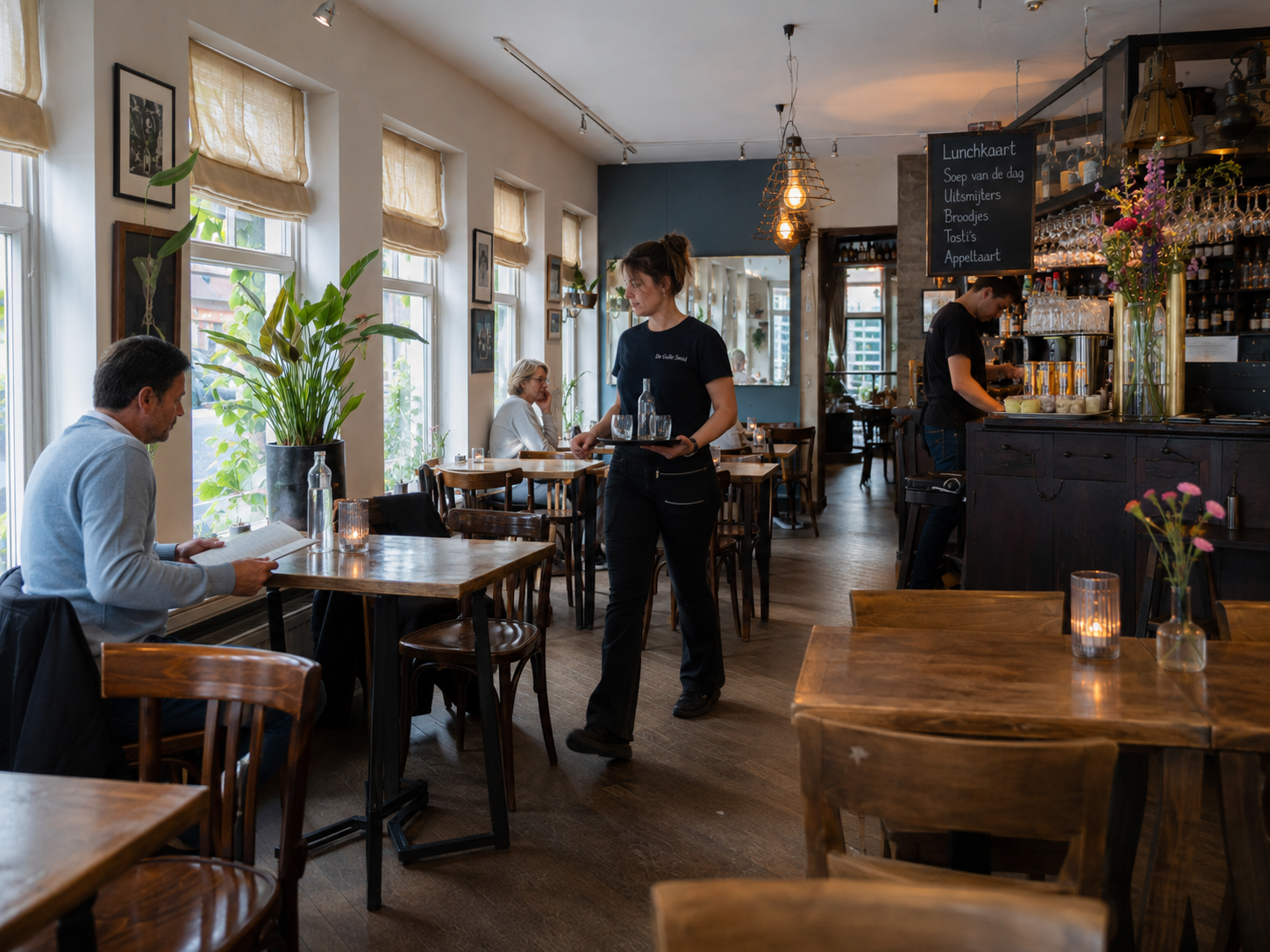

The challenges that threaten a restaurant’s success rarely arrive all at once. More often, they develop gradually. Service begins to feel less consistent than it once did. Managers spend more time solving urgent problems than improving the business. Labour costs creep upwards without a clear explanation. Team members become increasingly dependent on the owner for decisions, while operational issues that seemed temporary slowly become part of everyday life.
Because these changes happen incrementally, they are easy to normalise. What started as a temporary workaround becomes the standard way of working. Processes evolve through habit rather than design, and decisions are made based on experience rather than operational insight. The restaurant may still be busy, guests may still leave positive reviews and revenue may continue to grow. Yet behind the scenes, the operation becomes increasingly difficult to manage.
This is one of the biggest misconceptions in hospitality. Many owners believe they should only seek operational support when the business is underperforming. In reality, the strongest hospitality businesses invest in their operations long before they reach that point. They understand that operational excellence is not about fixing failure. It is about creating the structure that allows a successful restaurant to remain successful as it grows.
An operations consultant should therefore not be viewed as someone who simply reduces costs or improves efficiency. Their role is to understand how the restaurant functions as a complete operating system. Every decision influences another part of the business. Menu design affects purchasing and kitchen workflows. Staffing influences service quality and guest satisfaction. Forecasting shapes inventory levels and labour planning. Financial performance is not the result of individual decisions, but of how well these interconnected elements work together.
The difficulty is that restaurant owners are often too close to the operation to see these relationships clearly. Running daily service demands constant attention. There are employees to support, guests to look after, suppliers to manage and unexpected situations to resolve. When most of the day is spent keeping the operation moving, there is little time left to step back and ask whether the operation itself is designed as effectively as it could be.
This is why operational problems often persist even under strong leadership. They are rarely caused by a lack of effort or commitment. More often, they are the result of systems that have not evolved alongside the business. As restaurants grow, complexity increases. Without stronger processes, clearer responsibilities and better operational visibility, that complexity eventually begins to affect both the guest experience and financial performance.
This article explores ten common signs that indicate a restaurant may benefit from a fresh operational perspective. None of these signs necessarily mean a restaurant is failing. In fact, many successful restaurants experience them. Recognising these patterns early creates an opportunity to strengthen the business before small operational weaknesses become structural challenges.
1. You’re constantly solving the same problems
Every restaurant experiences operational issues. A supplier delivers late, an employee calls in sick, a piece of equipment fails during service or an unexpected rush places pressure on the team. These situations are part of hospitality and can never be eliminated completely. The real concern is not that problems occur. It is that the same problems continue to occur, week after week, despite repeated efforts to solve them.
Many restaurant owners become exceptionally good at firefighting. They know how to step into the kitchen when service falls behind, cover a shift when someone is absent or resolve a guest complaint before it escalates. These are valuable leadership skills, particularly in the early stages of a business. However, when solving operational problems becomes the owner’s primary role, it often signals that the operation is relying on intervention rather than structure.
This distinction is important because repeatedly solving the same issue is rarely evidence that the team is underperforming. More often, it indicates that the underlying system has never been addressed. If food orders are consistently delayed during peak service, the issue may not be the kitchen staff. It could be the menu design, the layout of the kitchen, unclear communication between front and back of house or unrealistic preparation times. If inventory shortages occur every week, ordering processes may be the problem rather than supplier reliability. If managers spend every weekend reorganising staff schedules, the challenge may lie in workforce planning rather than employee availability.
One of the easiest ways to recognise this pattern is to ask a simple question: What problems did we solve this week that we also solved last month? If the answer includes the same operational issues, it is worth asking why those issues continue to exist. Temporary solutions may keep service running, but they rarely improve the operation itself.
This is where an external operational perspective can be particularly valuable. People working inside the business naturally focus on keeping the restaurant moving. An operations consultant has the opportunity to step back and identify recurring patterns that are difficult to recognise from within. Instead of treating each issue as an isolated event, they look for the operational conditions that allow those issues to keep returning.
High-performing restaurants spend less time reacting to recurring problems because they invest time in understanding what creates them. They build systems that prevent issues rather than relying on experience and hard work to resolve them every day.
A restaurant becomes stronger not when it gets better at solving the same problems, but when those problems stop happening in the first place.
2. Revenue is growing, but profitability isn’t
For many restaurant owners, increasing revenue feels like the clearest sign that the business is moving in the right direction. More guests are coming through the door, tables are full more often and monthly turnover continues to increase. On the surface, these are all positive indicators. Yet one of the most common operational challenges in hospitality is discovering that higher revenue does not automatically translate into higher profitability.
This often surprises operators because the assumption seems logical. If sales increase, profits should follow. In practice, restaurants operate as complex systems where growth also creates additional costs. More guests require more preparation, more labour, greater purchasing volumes, increased cleaning, higher utility usage and more coordination between teams. If these operational demands grow faster than revenue, the business can become busier without becoming significantly more profitable.
A restaurant may experience this after introducing a larger menu, extending opening hours or investing in a marketing campaign that successfully attracts more guests. Revenue improves, but so do labour hours, food waste and operational complexity. Managers spend more time coordinating shifts, kitchen teams work under greater pressure and service becomes harder to maintain consistently. The business appears successful because turnover is increasing, while the financial reality behind the operation tells a different story.
This is why experienced operators look beyond revenue and ask a different question: What is it costing us to generate this additional revenue? Every extra booking, every additional cover and every new service offering should contribute positively to the overall performance of the business. If growth requires a disproportionate increase in resources, it may indicate that the operating model is no longer supporting the scale of the business.
One useful way to think about this is through operational leverage. A well-designed restaurant becomes more efficient as demand increases because its processes, staffing model and systems are built to handle additional volume. A poorly designed operation experiences the opposite. Every increase in demand introduces more pressure, more coordination and more cost. Instead of benefiting from growth, the restaurant becomes increasingly difficult to manage.
This is often where an operations consultant can provide valuable insight. Rather than focusing solely on the financial results, they examine the relationship between revenue, labour, processes and operational capacity. They identify where growth is creating value and where it is introducing unnecessary complexity. The objective is not simply to increase sales, but to ensure that the operation is capable of converting those sales into sustainable profit.
A busy restaurant is not necessarily a healthy business. Sustainable growth is measured not by how much revenue the restaurant generates, but by how effectively the operation turns that revenue into long-term profitability.
3. Your team depends too much on you
In the early stages of a restaurant, it is natural for the owner to be involved in almost every aspect of the operation. They know the menu inside out, greet regular guests, solve problems during service and make countless decisions throughout the day. Their presence often helps establish the standards and culture that define the business. As the restaurant grows, however, this level of involvement should gradually become less necessary. If the operation continues to rely on the owner for every important decision, growth eventually reaches a limit.
Many restaurant owners mistake being indispensable for being effective. They are the first person employees turn to with questions, the only one who can resolve operational issues and the person expected to approve everything from supplier orders to staff schedules. While this can create a sense of control, it also creates a significant operational risk. The restaurant becomes dependent on one individual’s knowledge, judgement and availability.
This dependency often reveals itself in subtle ways. Managers hesitate to make decisions without approval. Employees wait for instructions instead of taking ownership. Service slows down because minor issues escalate to the owner. Holidays become difficult to take because the business struggles to operate confidently without constant oversight. The restaurant may appear well managed, but in reality it is being held together by one person’s continuous involvement.
The underlying problem is rarely the capability of the team. More often, it is the absence of clear systems, responsibilities and decision-making frameworks. When employees understand expectations, know where authority sits and have consistent processes to follow, they can make confident decisions without relying on the owner at every step. This does not reduce accountability. It strengthens it by ensuring decisions are made by the people closest to the work.
An operations consultant will often look beyond organisational charts and ask a different question: If the owner stepped away from the restaurant for two weeks, what would happen? The answer usually reveals where the operation depends too heavily on individuals rather than systems. It highlights gaps in training, communication, documentation and leadership that may not be visible during normal day-to-day operations.
The strongest restaurants are not those where the owner solves every problem personally. They are the ones where the owner has built an organisation capable of solving problems independently. This creates a more resilient business, develops stronger managers and gives employees greater ownership of the guest experience.
A restaurant should depend on its operating model, not on the constant presence of the person who built it. When leadership is supported by clear systems instead of continuous intervention, the business becomes easier to manage, easier to grow and far better equipped to deliver consistent hospitality every day.
4. Labour costs always seem higher than expected
Labour is one of the largest investments a restaurant makes, so it is understandable that rising labour costs quickly attract attention. Many owners regularly review labour percentages, compare scheduled hours against revenue and look for opportunities to reduce staffing. Yet despite these efforts, the numbers often refuse to improve. Labour costs remain stubbornly high, even when managers believe the team is working efficiently.
This is often a sign that the problem is not the number of employees, but the way the operation is designed. Labour costs are the outcome of hundreds of operational decisions made throughout the business. The menu influences preparation time. The layout of the kitchen affects movement and communication. Reservation patterns determine service pressure. Forecasting shapes staffing decisions. Even the way deliveries are organised or opening procedures are structured can have a measurable impact on how many labour hours the restaurant ultimately requires.
Consider a restaurant where the kitchen consistently needs extra staff during dinner service. The immediate conclusion may be that labour costs are too high. However, a closer look might reveal that the menu contains too many labour-intensive dishes, preparation tasks are concentrated into a short period, or ingredients are stored inefficiently, forcing employees to spend valuable time walking, searching and waiting. In this situation, reducing staffing may lower costs temporarily, but it does nothing to improve the operational conditions creating those costs.
The same principle applies to front-of-house operations. Servers who spend large parts of their shift looking for equipment, waiting for drinks from the bar, resolving communication issues with the kitchen or manually correcting reservation errors are not creating value for guests. They are compensating for operational inefficiencies. From a financial perspective, these hours appear as labour costs. From an operational perspective, they represent opportunities to improve the system.
An operations consultant approaches labour costs differently. Rather than asking whether the restaurant employs too many people, they ask why the business requires those labour hours in the first place. They analyse how demand flows through the operation, where bottlenecks occur, how work is organised and whether employees are spending their time on activities that genuinely improve the guest experience. This often reveals that the greatest opportunity lies not in reducing people, but in reducing unnecessary complexity.
High-performing restaurants understand that labour efficiency is not achieved by asking teams to work harder. It is achieved by creating an operation where people can work smarter. Clear workflows, accurate forecasting, well-designed processes and effective communication allow employees to deliver the same or even better service with less friction and fewer wasted hours.
If labour costs always feel higher than they should be, the numbers are usually pointing towards a deeper operational issue. Labour is rarely the root cause. It is often the clearest indicator of how effectively, or ineffectively, the restaurant has been designed to operate.
5. You have data, but very little operational insight
Most restaurants generate far more data than they did a decade ago. Point-of-sale systems track every transaction, reservation platforms monitor booking patterns, inventory software records stock movements and scheduling tools capture labour hours in detail. On paper, operators have access to more information than ever before. Yet many still struggle to answer relatively simple operational questions. Why does one shift consistently perform better than another? Why are labour costs increasing despite stable sales? Why does one location outperform another even when they follow the same concept?
The challenge is that data and insight are not the same thing. Data tells you what happened. Operational insight helps you understand why it happened and, more importantly, what should happen next. Many restaurants review dozens of reports every week, but those reports often exist in isolation. Sales are analysed separately from labour. Inventory is reviewed independently from menu performance. Guest feedback is discussed without considering staffing levels or operational pressure during service. As a result, managers can see the individual pieces but struggle to understand the complete picture.
Imagine a restaurant that notices food costs have increased over the past three months. The immediate response may be to negotiate with suppliers or look for cheaper ingredients. However, when the data is viewed alongside inventory records, sales mix and kitchen operations, a different story might emerge. Perhaps waste has increased because demand forecasting has become less accurate. Perhaps a recently expanded menu has introduced more slow-moving ingredients. Or perhaps inconsistent portion control is occurring during the busiest shifts because the kitchen is operating under excessive pressure. The financial outcome is visible in the reports, but the operational cause lies elsewhere.
The same applies to labour. A labour percentage that appears too high does not automatically indicate overstaffing. It may reflect inefficient scheduling, inconsistent service flows, excessive preparation work or poor coordination between departments. Without connecting operational data to what is actually happening on the restaurant floor, managers risk treating symptoms instead of addressing the underlying issue.
This is where an operations consultant provides a different perspective. Rather than reviewing reports individually, they connect operational, financial and organisational information to understand how the business functions as a whole. They look for relationships between metrics, identify recurring patterns and translate numbers into practical operational improvements. The goal is not to create more dashboards. It is to create better decisions.
The most successful restaurants are not necessarily those with the most sophisticated reporting systems. They are the ones that know which information matters, how different operational drivers influence one another and how to turn that understanding into action. They recognise that data is only valuable when it improves the way the restaurant operates.
Collecting information is relatively easy. Building operational insight is far more difficult, and far more valuable. It is the difference between knowing what your restaurant is doing and understanding why it performs the way it does.
6. Every manager runs the restaurant differently
Consistency is one of the defining characteristics of a well-operated restaurant. Guests expect the same quality of food, the same level of service and the same overall experience regardless of who is managing the shift. Yet in many restaurants, the operation changes noticeably depending on which manager is on duty. One manager follows procedures closely, another prefers to improvise. One prioritises guest interaction, another focuses almost exclusively on speed. Staff adapt their behaviour accordingly, creating an operation that feels different from one day to the next.
This variation often develops gradually. As businesses grow, experienced managers naturally develop their own ways of working. On the surface, this can appear positive because it gives managers autonomy. However, when core operational processes become dependent on individual preferences rather than shared standards, consistency begins to disappear. The restaurant is no longer operating as one business. It is operating as several slightly different businesses under the same brand.
The consequences extend far beyond the guest experience. Employees become uncertain about expectations because procedures change depending on who is leading the shift. Training becomes more difficult because new team members receive different instructions from different managers. Performance becomes harder to measure because operational results are influenced by inconsistent ways of working rather than a common operating model. Over time, this creates confusion, unnecessary friction and avoidable mistakes.
A useful way to identify this problem is to ask whether managers could swap shifts tomorrow without significantly changing the way the restaurant operates. If service standards, communication, decision-making or daily routines would change noticeably, the business may be relying too heavily on individual management styles instead of operational systems. Strong leaders should absolutely bring their own personality to the role, but they should all be working within the same operational framework.
This is not about creating rigid procedures that remove initiative. The best hospitality businesses encourage managers to exercise judgement, particularly when responding to guests or unexpected situations. However, judgement should exist on top of a consistent operational foundation. Core processes, service standards, decision rights and performance expectations should remain stable regardless of who is leading the team.
An operations consultant will often examine this consistency by observing different shifts, speaking with managers and comparing how decisions are made across the business. Their objective is not to standardise personalities. It is to identify where variation is creating operational risk and where clearer systems can support more consistent execution.
Restaurants become easier to manage when success no longer depends on having the right manager working the right shift. Instead, they create an operating model that enables every capable manager to deliver the same standard of performance. Individual leadership still matters, but it strengthens the system rather than replacing it.
When every manager runs the restaurant differently, the issue is rarely the managers themselves. It is usually a sign that the operation lacks the clarity needed to produce consistent results.
7. Small operational issues become daily firefighting
Every restaurant experiences unexpected challenges. A supplier delivers the wrong order, a dishwasher breaks down during service or several employees call in sick on the same day. These situations are impossible to eliminate completely and are part of running any hospitality business. The warning sign is not that these events happen. It is that managers spend most of their time reacting to problems instead of improving the operation.
Firefighting can easily become normal. Service begins with last-minute staffing changes, inventory shortages are discovered just before preparation starts, guest complaints require immediate attention and communication between the kitchen and front of house becomes increasingly reactive. Each individual issue may appear manageable, but together they consume an enormous amount of management time and energy. By the end of the week, the restaurant has survived another series of busy services, yet very little has actually improved.
One of the reasons this pattern is so difficult to break is that reactive management often feels productive. Managers are constantly making decisions, solving problems and supporting the team. From the outside, they appear highly engaged. In reality, they are compensating for weaknesses in the operating model. Every hour spent resolving a recurring issue is an hour that cannot be invested in improving processes, developing employees or planning for future growth.
This creates a cycle that many restaurant owners recognise. Because there is no time to improve the operation, the same problems continue to occur. Because the same problems continue to occur, there is even less time available for improvement. Over time, the business becomes increasingly dependent on experienced individuals who know how to keep everything together through hard work and quick decision-making. While admirable, this is not a sustainable way to operate.
An operations consultant approaches these situations differently. Rather than asking how the latest problem was resolved, they ask why the problem was able to occur in the first place. Was the inventory shortage caused by poor supplier performance, or by inaccurate forecasting? Was the delay in service caused by a lack of staff, or by bottlenecks in the kitchen workflow? Was the guest complaint an isolated incident, or does it reveal a recurring weakness in the service process? The objective is not to improve firefighting. It is to remove the conditions that make firefighting necessary.
One useful way to assess the health of an operation is to look at how managers spend their time. If most of their day is dedicated to reacting, coordinating and fixing, the restaurant is likely operating below its potential. In high-performing businesses, managers still respond to unexpected situations, but they also have the capacity to analyse performance, coach employees, refine processes and strengthen the systems that support daily execution.
The difference between a good restaurant and a great one is often not the absence of operational problems. It is the amount of time the leadership team spends preventing them instead of responding to them.
If every day feels like a race to solve the next urgent issue, the restaurant does not have a people problem. It has an operational design problem.
8. Your systems haven’t evolved as the business has grown
Many restaurants begin with informal ways of working. In the early stages, this is often an advantage. A small team can communicate directly, decisions can be made quickly and everyone understands how the business operates because they are closely involved in every part of it. The owner knows the suppliers, the kitchen team understands expectations, managers can solve problems through conversation and important knowledge exists naturally within the team.
The challenge begins when the restaurant grows. More employees join, responsibilities become more specialised and the number of daily decisions increases. The informal systems that worked when the business was smaller start to create limitations. What was once efficient becomes dependent on memory, individual experience and constant communication. The restaurant may still function, but the effort required to keep it running increases significantly.
This transition is one of the most common operational challenges in hospitality. Growth exposes the weaknesses that were hidden during the early stages of the business. A chef who previously knew every purchasing decision may struggle to maintain control as the kitchen team expands. A general manager who once personally trained every employee may no longer have the capacity to maintain the same standards. A restaurant group opening multiple locations cannot rely on the same informal communication methods that worked for one location.
The issue is not that the original way of working was wrong. It was appropriate for the stage of the business at that time. The problem is that the operating model did not evolve alongside the complexity of the organisation. Many restaurants continue using processes designed for a smaller business while expecting them to support a larger and more demanding operation.
This is where systems become essential. Strong systems do not replace hospitality or reduce flexibility. They create the foundation that allows hospitality to remain consistent as complexity increases. Clear standard operating procedures, defined responsibilities, structured training, effective communication routines and reliable performance tracking help ensure that knowledge is not lost when individuals leave or the business expands.
A common misconception is that creating systems makes a restaurant feel corporate or impersonal. In reality, the opposite is often true. When basic operational elements are organised, employees have more freedom to focus on guests. They spend less time searching for information, asking repetitive questions or solving avoidable issues. Structure creates space for better hospitality.
An operations consultant helps businesses identify where informal ways of working have become operational risks. This does not mean documenting every small action or creating unnecessary bureaucracy. It means understanding which processes are critical to performance and ensuring they are clear, repeatable and aligned with the way the business wants to operate.
A restaurant should not become more complicated simply because it becomes larger. The purpose of operational systems is to make growth manageable. They allow a business to maintain quality, develop stronger teams and reduce dependency on individual knowledge. Growth is not what makes restaurants difficult to manage. Growth reveals whether the systems behind the restaurant are strong enough to support it.
9. You know something isn’t working, but you can’t identify the root cause
One of the most difficult situations for restaurant owners is knowing that something feels wrong without being able to clearly define what the problem is. The restaurant may still have guests, the team may still be committed and the business may still generate revenue, but certain areas continue to create frustration. Margins feel tighter than expected, service feels inconsistent, managers seem overwhelmed or operational pressure keeps increasing without a clear explanation.
This situation is common because operational problems rarely appear exactly where they originate. The visible symptom is often only the final result of a much deeper chain of decisions and processes. A restaurant may experience declining profitability and assume it has a sales problem, while the real issue is rising complexity caused by an inefficient menu. A team may appear understaffed, while the underlying challenge is poor workflow design that creates unnecessary labour demand. A restaurant may struggle with employee performance, while unclear expectations and inconsistent training are the actual causes.
This is why solving operational challenges requires more than identifying what is going wrong. It requires understanding the relationships between different parts of the business. Hospitality operations are interconnected systems. A change in one area almost always influences another. Adding menu items affects purchasing, preparation, staffing and waste. Changing opening hours affects scheduling, demand patterns and profitability. Introducing new service standards affects training requirements and operational capacity.
Many restaurant leaders try to solve these challenges through individual improvements. They adjust the schedule, change suppliers, replace a process or introduce a new tool. These actions can provide temporary relief, but if the underlying system remains unchanged, the problem often returns in a different form. The restaurant becomes trapped in a cycle of adjustments without ever addressing the real cause.
This is where an external operational perspective can create significant value. When you are deeply involved in running a restaurant every day, it is difficult to separate urgent issues from structural challenges. An operations consultant provides the ability to step back, analyse the complete operation and identify patterns that are difficult to see from within. The focus shifts from treating symptoms to understanding the conditions that create those symptoms.
A strong diagnostic approach looks across the entire business. How are decisions made? Where does information flow effectively and where does it break down? Which processes depend too heavily on individual knowledge? Are financial results connected to operational realities? Are teams aligned around the same priorities? These questions reveal whether the issue is isolated or whether it reflects a broader weakness in the operating model.
The most successful restaurant improvements rarely come from finding one simple solution. They come from developing a clearer understanding of how the business works as a whole. Once the root causes are visible, decisions become easier, improvements become more targeted and change becomes more sustainable. The first step toward improving an operation is not always knowing the answer. Sometimes it is knowing how to ask better questions.
10. You’re too busy running the restaurant to improve it
One of the clearest signs that a restaurant needs operational support is when the leadership team has no time left to work on the business because they are constantly working inside it. This is one of the most common challenges for passionate hospitality entrepreneurs. They built the concept, understand the guests, know the team and have the ability to solve problems quickly. Their involvement is often one of the reasons the restaurant succeeds. However, as the business matures, the same dedication that helped create success can become the biggest barrier to further improvement.
The daily reality of hospitality leaves little room for reflection. There are employees to manage, suppliers to coordinate, guests to satisfy and unexpected situations that require immediate attention. A restaurant owner may start the week planning to review costs, improve processes or develop the team, only to reach the end of the week having spent all available time responding to operational demands. The business continues running, but the important work that would make it stronger is continuously postponed.
This creates a common trap. The owner becomes the person who keeps the operation moving, but there is no time to improve the system that creates the need for constant involvement. The restaurant depends on experience, availability and personal problem-solving rather than on processes that allow the business to operate effectively without continuous intervention. Over time, this limits growth because every improvement requires more of the owner’s attention rather than creating more capacity.
The distinction between working in the business and working on the business is especially important in hospitality because operational improvement rarely happens during busy service. It requires time to analyse performance, review processes, identify inefficiencies and make thoughtful decisions about the future. These activities are often the first to disappear when daily pressures increase, even though they are the activities that create long-term value.
An operations consultant can provide the structured perspective and dedicated focus that is difficult to create internally. Their role is not to replace the knowledge of the owner or management team. In fact, the best operational improvements combine internal experience with an external perspective. The team understands the reality of the business, while an external expert can identify patterns, challenge assumptions and create a roadmap for improvement.
A mature restaurant should not require its owner to personally solve every challenge. The goal is not to remove the owner’s involvement or passion. It is to create an operation where leadership time can be invested in growth, innovation and strategic decisions rather than being consumed by recurring operational issues.
The strongest hospitality businesses are not built by owners who work the hardest forever. They are built by owners who create systems, develop people and design an operation that becomes stronger over time. When the day-to-day operation leaves no space for improvement, that is often the clearest signal that improvement itself has become the next operational priority.
A final thought: The right time to improve operations is before there is a crisis
Many restaurant owners begin looking for operational support only when a problem becomes impossible to ignore. Profitability has declined, employee turnover has increased, service standards are inconsistent or the pressure of running the business has become unsustainable. At that point, the need for change is clear. However, the strongest businesses understand that operational improvement is not a response to failure. It is a way of protecting future success.
The reality is that most operational challenges develop long before they become visible in financial results. A restaurant rarely becomes inefficient overnight. Small workarounds become standard practices. Individual knowledge replaces formal processes. Managers compensate for unclear responsibilities. Labour hours increase gradually because the operating model has become more complex. By the time these issues appear as declining margins or inconsistent guest experiences, the underlying causes may have existed for months or even years.
This is why operational maturity is such an important competitive advantage in hospitality. Restaurants that continuously review how they work are better positioned to adapt when circumstances change. They do not wait until costs become unmanageable or teams become overwhelmed. They create the visibility, systems and decision-making structures needed to identify opportunities before they become problems.
At The Operations Studio, we help hospitality businesses understand and improve the systems behind their performance. We work with restaurants, hotels and hospitality groups to identify operational challenges, create stronger processes and build the structures required for sustainable growth. Our approach focuses on understanding the complete operation, from daily workflows and team structures to financial performance and long-term scalability.
The objective is not to introduce complexity or create unnecessary processes. It is to remove complexity where it does not create value and strengthen the areas that directly influence performance. By bringing clarity to how the business operates, leaders can make better decisions, teams can execute more consistently and guests can receive a stronger experience.
The best time to improve operations is not when the business is struggling. It is when the business has enough ambition to become better. Whether a restaurant is preparing for growth, improving profitability or simply looking for a clearer way of working, understanding the operating system behind the concept is the foundation for long-term success. A great restaurant is built on more than a strong idea, talented people and passionate leadership. Those elements create the foundation. Operational clarity is what allows them to perform consistently, scale sustainably and continue creating value over time.

Leave a Reply